播放记录

6.0 |05月18日 |更新至高清
简介:

  在富豪老爹的豪宅里,三十岁的埃里克(杰森·苏戴奇斯 Jason Sudeikis 饰)过着衣食无忧的生活,趁着老爹不在家,他还会召集狐朋狗友们举办疯狂的派对,派对俨然成为了埃里克生命中不可分割的一部分。
  突然有一天,这样惬意的生活走到了尽头,老爹告诉埃里克,他要把豪宅卖掉。为了纪念曾经的生活,埃里克决定在豪宅中举办最后一次派对,这一消息让埃里克的朋友们个个蠢蠢欲动,每一个人都将生命中的种种希望寄托于这场空前盛大的狂欢节中。与此同时,为了能够尽可能长时间的将房子留在手中,埃里克开始和负责此宗买卖的房产经纪人凯丽(莱丝莉·比伯 Leslie Bibb 饰)约会,令埃里可没有想到的是,自己竟然陷入了凯丽的温柔乡中无法自拔。

猜你喜欢
换一换
不安分的年轻人们
530
10.0
已完结
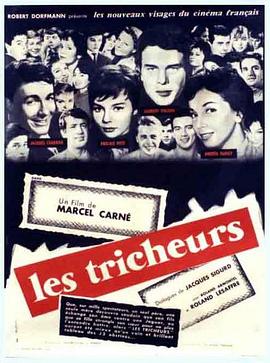
不安分的年轻人们
10.0
更新时间:05月19日
主演:帕斯卡尔·普缇,安德丽·帕里西,雅克·夏里尔,洛朗·特兹弗,让-保罗·贝尔蒙多,达妮·萨瓦尔
简介:Middle class student Bob Letellier enters a new world when he meets Alain, a free-thinking rebel who, along with his group of young Parisians, has opted for a life of instant gratification instead of work and commitment. At a party, Bob meets a young woman, Mic, who appears to be just as carefree and cynical as Alain. Mic's only dream is to own a luxury car, and with Bob's help, she manages to find the money to but it. Mic's friend Clo discovers she is pregnant and, not knowing who the father is, she asks Bob to marry her. When they next meet at a party, Bob and Mic deny that they have any feelings for one another - a declaration that soon leads to tragedy...    Marcel Carné is widely regarded as one of the standard bearers of French quality cinema of the 1930s and 1940s, responsible for such masterpieces as Quai des brumes (1938) and Les Enfants du Paradis (1945). How ironic then that, in 1958, towards the end of his film-making career, he should make a film which dared to portray the attitudes and behaviour of the 1950s youth, in a way that effectively captures the mood and sentiment of the time.    Les Tricheurs was a hugely controversial film, not least because of its blatant depiction of adolescent free-love, and was even banned in some regions of France. It also received some intensely unfavourable reviews, most notably from the young hotheads on the Cahiers du cinéma such as François Truffaut who cited this film as a prime example of the decline of French cinema into mediocrity. In spite of all this negative press, the film proved to be an astonishing commercial success, attracting five million cinema-goers, and was awarded the Grand Prix du Cinéma français in 1958.    Whilst Les Tricheurs is not as flawless as Carné's earlier masterpieces, it is nonetheless a significant work, having the power to both shock and move its audience, whilst having great entertainment value. It evokes the mood of its time in a way that few French films of this period did, depicting young people as pleasure-seeking rebels, rejecting the austerity and discipline of the previous generation whilst pursuing a life without cares, responsibilities or love. Similarities with James Dean's films of the 1950s (most notably Rebel without a Cause) are apparent, although Carné's treatment of young people is far more abstract - in his film they merely symbolise a world that has lost its way, more or less victims of post-war prosperity. Although the young people in Les Tricheurs lack the authenticity to be totally credible, the film does make an important, and indeed quite disturbing point, about where the permissive society may be heading.    Much of the pleasure of the film is in the performances from its four lead actors, Jacques Charrier, Pascale Petit, Laurent Terzieff and Andréa Parisy, although only Terzieff is really convincing in his role. Marcel Carné originally considered Alain Delon and Jean-Paul Belmondo for the parts of Bob and Alain respectively, before opting for Charrier and Terzieff. As a consolation, Carné offered Belmondo a smaller part in the film - alas too small for the actor to be noticed by the public. Belmondo's breakthrough had to wait until the following year when he starred in Jean-Luc Godard's revolutionary A bout de souffle, a film which offers a very different perspective of the youth generation.
5630
1958
不安分的年轻人们
主演:帕斯卡尔·普缇,安德丽·帕里西,雅克·夏里尔,洛朗·特兹弗,让-保罗·贝尔蒙多,达妮·萨瓦尔
欧洲的某个地方
645
6.0
已完结
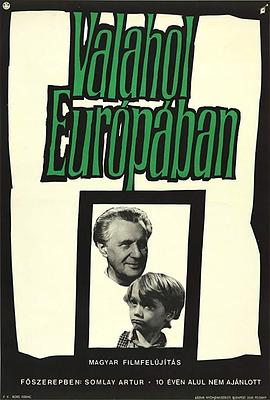
欧洲的某个地方
6.0
更新时间:05月19日
主演:ArtúrSomlay,MiklósGábor,ZsuzsaBánki
简介:Somewhere in the remote region, the war ends. In the midst of ruined cities and houses in the streets, in rural hamlets, everywhere where people still live, are children who have lost their homes and parents. Abandoned, hungry, and in rags, defenseless and humiliated, they wander through the world. Hunger drives them. Little streams of orphans merge into a river which rushes forward and submerges everything in its path. The children do not know any feeling; they know only the world of their enemies. They fight, steal, struggle for a mouthful of food, and violence is merely a means to get it. A gang led by Cahoun finds a refuge in an abandoned castle and encounters an old composer who has voluntarily retired into solitude from a world of hatred, treason, and crime. How can they find a common ground, how can they become mutual friends The castle becomes their hiding place but possibly it will also be their first home which they may organize and must defend. But even for this, the price will be very high.  To this simple story, the journalist, writer, poet, scriptwriter, movie director, and film theoretician Béla Balázs applied many years of experience. He and the director Géza Radványi created a work which opened a new postwar chapter in Hungarian film. Surprisingly, this film has not lost any of its impact over the years, especially on a profound philosophical level. That is to say, it is not merely a movie about war; it is not important in what location and in what period of time it takes place. It is a story outside of time about the joyless fate of children who pay dearly for the cruel war games of adults.  At the time it was premiered, the movie was enthusiastically received by the critics. The main roles were taken by streetwise boys of a children's group who created their roles improvisationally in close contact with a few professional actors, and in the children's acting their own fresh experience of war's turmoil appears to be reflected. At the same time, their performance fits admirably into the mosaic of a very complex movie language. Balázs's influence revealed itself, above all, in the introductory sequences an air raid on an amusement park, seen in a montage of dramatic situations evoking the last spasms of war, where, undoubtedly, we discern the influence of classical Soviet cinematography. Shooting, the boy's escape, the locomotive's wheels, the shadows of soldiers with submachine guns, the sound of a whistle—the images are linked together in abrupt sequences in which varying shots and expressive sharp sounds are emphasized. A perfectly planned screenplay avoided all elements of sentimentality, time-worn stereotypes of wronged children, romanticism and cheap simplification. The authors succeeded in bridging the perilous dramatic abyss of the metamorphosis of a children's community. Their telling of the story (the scene of pillaging, the assault on the castle, etc) independently introduced some neorealist elements which, at that time, were being propagated in Italy by De Sica, Rossellini, and other film artists. The rebukes of contemporary critics, who called attention to formalism for its own sake have been forgotten. The masterly art of cameraman Barnabás Hegyi gives vitality to the poetic images. His angle shots of the children, his composition of scenes in the castle interior, are a living document of the times, and underline the atmosphere and the characters of the protagonists. The success of the picture was also enhanced by the musical art of composer Dénes Buday who, in tense situations, inserted the theme of the Marseilaise into the movie's structure, as a motive of community unification, as an expression of friendship and the possibility of understanding.  Valahol Europaban is the first significant postwar Hungarian film. It originated in a relaxed atmosphere, replete with joy and euphoria, and it includes these elements in order to demonstrate the strength of humanism, tolerance, and friendship. It represents a general condemnation of war anywhere in the world, in any form.

5694
1948
欧洲的某个地方
主演:ArtúrSomlay,MiklósGábor,ZsuzsaBánki
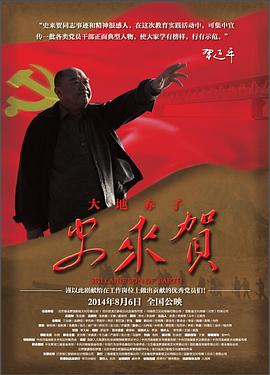
大地赤子史来贺
519
4.0
奉献一生的人民公仆
大地赤子史来贺
4.0
更新时间:06月05日
主演:孙滔,史光辉,宋晓英,牛力威,闫淑琴,刘小宝,马国伟
简介:十一届三中全会以后,家庭联产承包责任制的推行,让农村生产力得到了极大的解放。土地分不分到农户,工厂包不包到个人是集体走富路,还是个人奔小康刘庄面临着痛苦的选择。史来贺一遍遍地学习十一届三中全会的公报、回顾刘庄的发展历程。他得出的结论是,分则不利,合则有力。刘庄从自己的实际出发,成立了农工商联合社,实行“综合经营、专业生产、分级管理、奖惩联产”。在一片争议声中,刘庄人用自己的实践证明史来贺的决断和刘庄人的选择是正确的。  史来贺当上刘庄村的支部书记之后,凡事总是先为群众着想,宁肯自己吃亏不能让群众吃亏,成了他多年的习惯。1965年,他任县委副书记,县里开始给他发工资。这时候刘庄的分配水平还不高,史来贺把县里发的工资交到村里,和村民一样拿工分。刘庄的分配水平大幅度提高以后,史来贺又放弃了拿村里的分配,拿起了县里的工资。有心人为史来贺制作了一份“1977年至1990年史来贺与刘庄同等劳力年收入对照表”,从中可以看出,仅这14年里,史来贺比刘庄同等劳力少收入2.5万余元。1976年,史来贺带领村民自筹资金要给每家每户盖成独门独户的二层小楼。在历尽千辛万苦之后,第一批新房建成了。村民们要建房出力最大、操心最多的史来贺先搬进去住。史来贺召开大会说“搬新房先群众,后干部。群众中谁住房困难谁先搬。”就这样,盖好一批,搬迁一批。直到6年以后,史来贺才和最后5户一起搬进新居。  二十世纪七十年代,党的十一届三中全会的召开给史来贺所在的刘庄村经济发展带来勃勃生机,时任刘庄村党委书记的史来贺面对集体经济落后、村民贫困的现状,挑起了带领全村人治穷致富的重担。改革开放后,政策允许一部分人先富起来。当时他正年富力强,两个儿子世领、世会也有才干,爷儿仨如拉出去单干,人脉本事足以轻松致富,甚至有人预言他会成为雄踞中原的富翁……他却说:“个人富了,大多数人还穷,吃饭不香,躺在床上也睡不好觉呀。集体搞好了,群众富了,个人也就富在其中了。”他多年养成习惯,每夜入睡前,都要对全村300多户“过电影”。刘庄村民说:“在咱村,是集体致富,不漏一家。全村谁家日子不能过了,老史都过去拉一把。特别是对困难户,格外看得重,恐怕他们过不好。”他最牵挂的是病人、老人、孤儿寡母、残疾人,连到刘庄上班的外地合同工都感叹:“这些可怜人,平时谁理?撵在人家后头说话人家都不想听呢,他们在刘庄有福了。”  为了让刘庄群众尽快富起来,沐浴着改革开放的春风,史来贺带领村民先后办起了食品厂、造纸厂、淀粉厂。在那个物资紧缺的年代,这些工厂很快为刘庄积累了大量的财富。党的十一届三中全会以后,刘庄发展进入了快车道。史来贺和村班子成员反复考察,引进了高科技生物工程项目,在刘庄建设了一座全国最大的以生产肌苷为主的生物制药厂。经过此后几年的生产规模不断扩大,技术不断创新,刘庄药厂已经位列全国医药行业百强, 生产的肌苷产量已占据全国的一半以上市场份额,年产值占到了刘庄总产值的80%以上。史来贺运用边学边干的实践中掌握的领导科学和管理知识,史来贺带领刘庄形成了以农促工、以工建农、农工商并举的集体经济的新格局。  史来贺为了刘庄的发展,为了刘庄群众的富裕吃了一辈子亏,换来的是刘庄群众对党组织的无限信赖,换来的是基层党组织在群众中的凝聚力、感召力和战斗力。
2544
2014
大地赤子史来贺
主演:孙滔,史光辉,宋晓英,牛力威,闫淑琴,刘小宝,马国伟
评论区
首页
电影
连续剧
动漫
综艺记录
短剧

每1天弹出一次

重要通知

线路一 https://8ju.xin

线路二 https://8ju.top

◆防止迷路请记住我们发布页地址:baju.app